Why Monoammonium Phosphate Content Matters in ABC PowderMeta Description
Introduction
When buyers compare different ABC powder products, one specification appears repeatedly: monoammonium phosphate content. Some manufacturers offer ABC powder with 40% monoammonium phosphate, while others provide 75%, 80%, or even 90% formulations. Although these products may look similar from the outside, the percentage of monoammonium phosphate inside the dry chemical powder can significantly affect performance, certification results, and overall fire suppression efficiency.
Many buyers focus only on price when sourcing a dry chemical fire extinguishing agent. However, understanding the relationship between monoammonium phosphate content and fire suppression efficiency is essential for making the right purchasing decision. The wrong choice may lead to reduced fire ratings, higher consumption during use, and lower customer satisfaction.
This article explains how monoammonium phosphate content influences ABC powder performance and how buyers can select the most suitable dry chemical powder for their market.
What Is Monoammonium Phosphate?
Monoammonium phosphate is the primary active ingredient in most ABC powder formulations. It is responsible for extinguishing Class A, Class B, and Class C fires, making it one of the most widely used components in a dry chemical fire extinguishing agent.
When exposed to high temperatures, monoammonium phosphate decomposes and forms a protective layer over combustible materials. This layer isolates oxygen and prevents reignition. At the same time, the dry chemical powder interrupts the combustion chain reaction, improving overall fire suppression efficiency.
Because monoammonium phosphate performs both physical and chemical fire suppression functions, its concentration directly affects the quality of ABC powder.
Why Content Percentage Matters
Not all ABC powder products offer the same extinguishing capability. The amount of monoammonium phosphate inside the dry chemical powder determines how much active material is available during firefighting.
A higher concentration of monoammonium phosphate generally provides:
Faster extinguishing performance
Higher fire ratings
Better Class A protection
Improved fire suppression efficiency
Reduced powder consumption
In contrast, lower-content ABC powder contains more filler materials and fewer active components. Although the product may cost less, the overall fire suppression efficiency is often lower.
This is why many international buyers increasingly request higher-quality dry chemical fire extinguishing agent formulations.
Comparing Common ABC Powder Grades
40% ABC Powder
40% ABC powder is widely used in price-sensitive markets. It contains a moderate amount of monoammonium phosphate and is suitable for basic fire protection applications.
Advantages include:
Lower cost
Easier market acceptance
Suitable for standard extinguishers
However, fire suppression efficiency is generally lower compared with premium dry chemical powder formulations.
75% ABC Powder
75% ABC powder is one of the most popular grades in export markets. The higher monoammonium phosphate content provides stronger extinguishing performance while maintaining reasonable cost.
Benefits include:
Better fire ratings
Improved fire suppression efficiency
Stronger Class A fire performance
Greater customer confidence
Many professional users prefer this type of dry chemical fire extinguishing agent because it balances performance and affordability.
90% ABC Powder
90% ABC powder represents the premium end of the market. With very high monoammonium phosphate content, this dry chemical powder offers exceptional extinguishing capability.
Advantages include:
Maximum fire suppression efficiency
Faster flame knockdown
Reduced extinguishing agent usage
Superior performance in demanding applications
Although more expensive, high-content ABC powder is often selected for industrial projects and high-risk environments.
Fire Suppression Efficiency and Active Ingredient Levels
The relationship between monoammonium phosphate content and fire suppression efficiency is straightforward. More active ingredient means more effective interruption of combustion.
When a dry chemical fire extinguishing agent is discharged, every particle contributes to extinguishing the fire. If the percentage of monoammonium phosphate is low, a larger amount of dry chemical powder may be required to achieve the same result.
Higher-content ABC powder typically produces:
Faster flame suppression
Lower reignition risk
Better heat isolation
Improved extinguishing consistency
As a result, fire suppression efficiency becomes one of the most important indicators for evaluating dry chemical powder quality.
How Higher Content Affects Certification
Certification standards often require specific fire performance levels. In many cases, increasing monoammonium phosphate content helps manufacturers achieve higher ratings.
Testing organizations evaluate:
Extinguishing capability
Discharge effectiveness
Fire suppression efficiency
Reignition resistance
A high-quality dry chemical fire extinguishing agent with sufficient monoammonium phosphate content is more likely to pass demanding certification requirements.
This is one reason why premium ABC powder is preferred in developed markets.
Does Higher Content Always Mean Better?
Although higher monoammonium phosphate content usually improves performance, content alone does not determine product quality.
Other important factors include:
Particle size distribution
Surface treatment
Moisture resistance
Flowability
Manufacturing consistency
A poorly manufactured dry chemical powder with high monoammonium phosphate content may still perform worse than a well-engineered ABC powder with a slightly lower concentration.
Therefore, buyers should evaluate the complete dry chemical fire extinguishing agent rather than focusing on a single specification.
How Buyers Can Verify Content
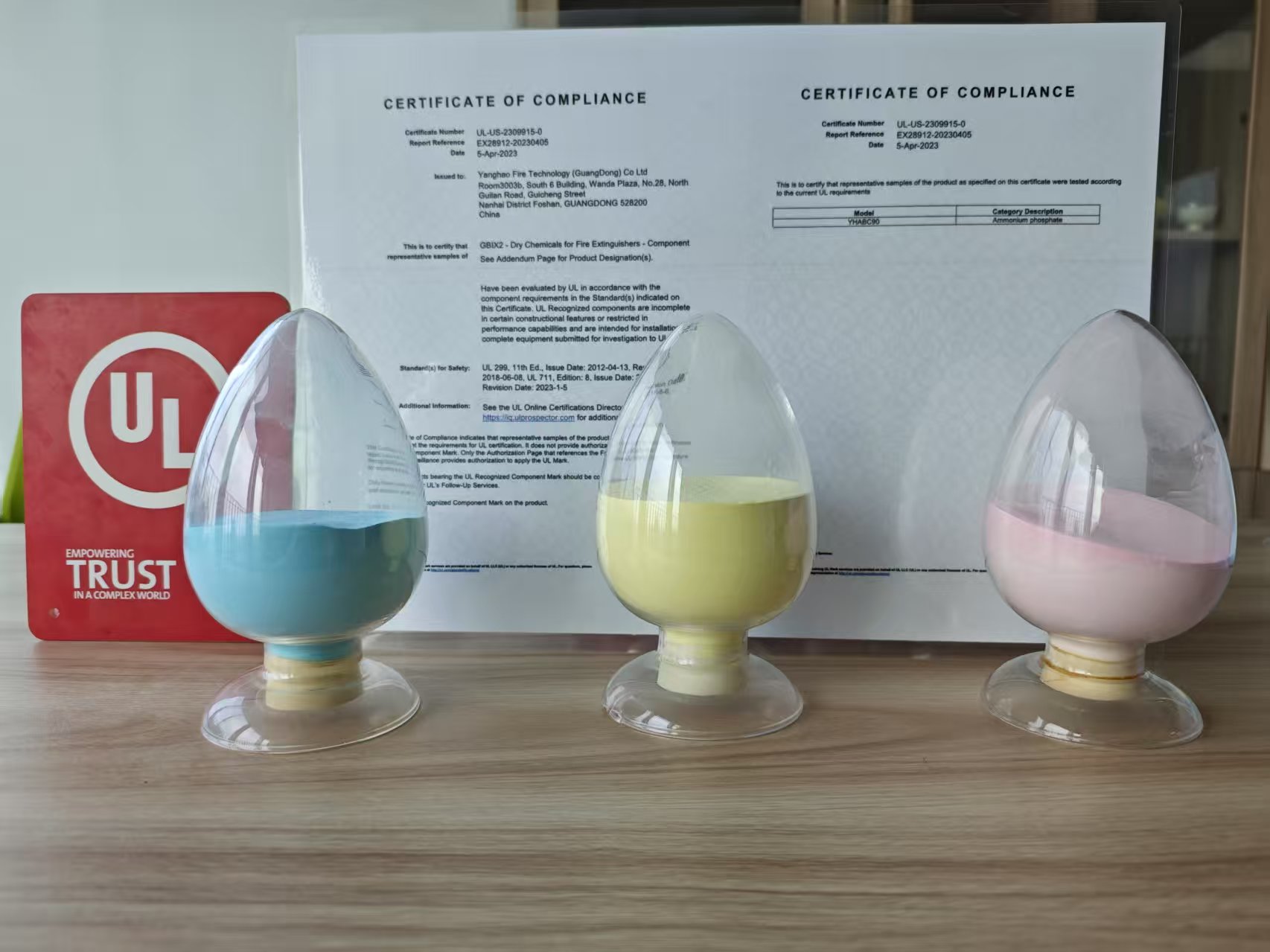
Professional buyers should request laboratory reports before purchasing ABC powder.
Common verification methods include:
Chemical analysis
Third-party testing
Certification reports
Production quality records
These documents help confirm the actual monoammonium phosphate content and ensure the dry chemical powder meets the required fire suppression efficiency standards.
Reliable suppliers are usually willing to provide detailed testing information.
Choosing the Right Grade for Your Market
Different markets require different levels of performance.
For cost-sensitive applications, standard ABC powder may be sufficient. For industrial users, commercial buildings, and premium projects, higher monoammonium phosphate content often provides better long-term value.
When selecting a dry chemical fire extinguishing agent, buyers should consider:
Local regulations
Certification requirements
Customer expectations
Fire suppression efficiency targets
Budget considerations
The best choice is not always the cheapest option but the product that delivers consistent performance and reliability.
Conclusion
Monoammonium phosphate is the key ingredient that determines the effectiveness of ABC powder. Its concentration directly influences dry chemical powder performance, certification results, and overall fire suppression efficiency.
While higher monoammonium phosphate content generally improves the capability of a dry chemical fire extinguishing agent, buyers should also evaluate particle quality, moisture resistance, and manufacturing standards.
By understanding how monoammonium phosphate affects ABC powder, importers and distributors can make better purchasing decisions, improve customer satisfaction, and provide reliable fire protection products for their markets.