Why Fire Extinguishers Lose Pressure Over Time
Introduction
A fire extinguisher is expected to work immediately during an emergency. However, many extinguishers gradually lose pressure during storage, transportation, or long-term use. Once internal pressure drops below the required level, the extinguisher may fail to discharge properly, and the overall fire suppression efficiency can decrease significantly.
For buyers, distributors, and manufacturers, pressure loss is a serious issue because it directly affects the reliability of the dry chemical fire extinguishing agent inside the cylinder. Even high-quality ABC powder cannot perform correctly if the extinguisher lacks sufficient pressure.
Pressure loss is not caused by a single factor. It is usually connected to cylinder sealing, valve quality, environmental conditions, and the condition of the dry chemical powder itself. In particular, moisture-sensitive materials such as monoammonium phosphate may indirectly affect discharge stability over time.
Understanding why fire extinguishers lose pressure helps buyers improve storage management, reduce product failure, and maintain stable fire suppression efficiency.
How Fire Extinguishers Maintain Pressure
Most portable extinguishers work by storing pressure inside the cylinder. This pressure forces the dry chemical powder out through the hose and nozzle during operation.
For standard ABC powder extinguishers, nitrogen is commonly used as the propellant gas because it is stable and non-flammable. The gas pushes the dry chemical fire extinguishing agent toward the fire zone at high speed.
If the pressure level decreases:
Discharge distance becomes shorter
Spray strength weakens
Powder flow becomes unstable
Fire suppression efficiency decreases
Even if the ABC powder itself remains chemically stable, pressure loss can still make the extinguisher unreliable during emergencies.
Cause 1: Valve Leakage
One of the most common reasons for pressure loss is valve leakage.
How Leakage Happens
The valve system contains multiple sealing components, including:
Rubber O-rings
Gaskets
Threaded connections
Pressure pins
Over time, these parts may wear out or become damaged.
Small leaks are often difficult to notice, but they slowly release internal gas pressure from the extinguisher. As pressure decreases, the dry chemical powder cannot discharge effectively, reducing fire suppression efficiency.
Low-quality extinguishers often use weaker valve materials, making leakage more likely.
Cause 2: Poor Cylinder Manufacturing
Cylinder quality directly affects the stability of the dry chemical fire extinguishing agent system.
Common Cylinder Problems
Poor manufacturing may lead to:
Microscopic cracks
Weak welding points
Metal fatigue
Corrosion
These defects allow gas to escape gradually, especially during long-term storage.
When pressure drops, even high-grade ABC powder containing premium monoammonium phosphate cannot achieve proper discharge performance.
Reliable cylinder manufacturing is essential for maintaining consistent fire suppression efficiency.
Cause 3: Temperature Changes
Environmental temperature strongly affects extinguisher pressure.
High Temperature Effects
When extinguishers are exposed to excessive heat:
Internal pressure temporarily rises
Sealing components expand
Valve stress increases
Repeated exposure can damage sealing systems and eventually create leakage.
Low Temperature Effects
In cold environments:
Gas pressure naturally decreases
Discharge force becomes weaker
Dry chemical powder may not spray effectively
This directly impacts the performance of the dry chemical fire extinguishing agent and reduces fire suppression efficiency.
Cause 4: Moisture Damage Inside the Extinguisher
Moisture is another hidden reason behind pressure-related problems.
Why Moisture Matters
When humidity enters the extinguisher:
Dry chemical powder may absorb water
Caking begins to form
Discharge flow becomes restricted
Because monoammonium phosphate is hygroscopic, ABC powder is especially sensitive to moisture contamination.
Although moisture itself may not directly release pressure, it affects internal powder movement and creates abnormal discharge conditions that lower fire suppression efficiency.
Cause 5: Long-Term Storage Without Maintenance
Fire extinguishers require regular inspection. However, many units remain unused for years without maintenance.
Problems Caused by Neglect
Over time:
Seals age naturally
Ppressure gauges become inaccurate
Iinternal gas slowly escapes
Dry chemical powder settles or cakes
Without inspection, users may not notice that the extinguisher has already lost effective pressure.
This is especially dangerous because the dry chemical fire extinguishing agent may appear normal externally while actual fire suppression efficiency is severely reduced.
Cause 6: Low-Quality Dry Chemical Powder
Although pressure mainly depends on the cylinder system, the quality of the dry chemical powder also matters.
How Poor Powder Affects Performance
Low-quality ABC powder may:
Absorb moisture faster
Form large agglomerates
Block discharge passages
Create uneven spray patterns
When powder flow becomes restricted, internal pressure distribution changes and discharge performance weakens.
High-purity monoammonium phosphate combined with proper surface treatment helps maintain stable flow and reliable fire suppression efficiency.
Signs That an Extinguisher Is Losing Pressure
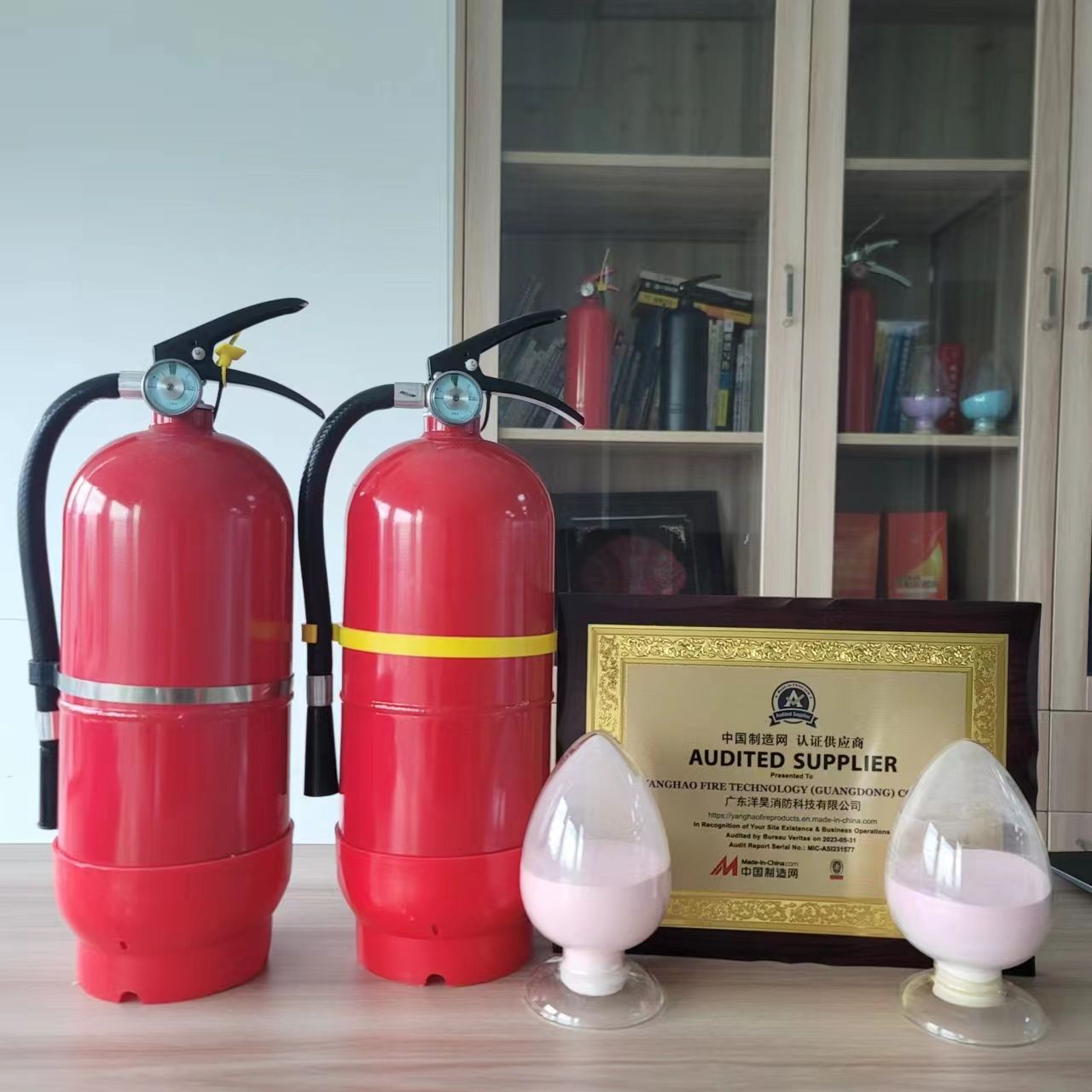
Buyers and users should monitor extinguishers for warning signs such as:
Pressure gauge below normal range
Weak discharge during testing
Unusually short spray distance
Visible corrosion near the valve
Loose or damaged seals
These signs often indicate that the dry chemical fire extinguishing agent may no longer provide reliable fire suppression efficiency.
How Manufacturers Prevent Pressure Loss
Professional manufacturers use several methods to improve extinguisher reliability.
High-Quality Valve Systems
Durable sealing components reduce gas leakage and help protect the dry chemical powder system.
Strong Cylinder Materials
High-strength steel and corrosion-resistant coatings improve long-term stability.
Moisture Protection
Reliable ABC powder manufacturers apply hydrophobic treatment to protect monoammonium phosphate from humidity.
Strict Pressure Testing
Every dry chemical fire extinguishing agent system should undergo pressure testing before shipment.
Best Storage Practices
Proper storage conditions help maintain extinguisher performance.
Recommended Conditions
Keep extinguishers in dry environments
Avoid direct sunlight
Pprevent extreme temperatures
Inspect pressure gauges regularly
Rotate stock periodically
These practices help preserve both the dry chemical powder and overall fire suppression efficiency.
Why Pressure Stability Matters
A fire extinguisher may look perfectly normal from the outside while already losing effectiveness internally.
If pressure becomes too low:
Ddischarge distance decreases
Fire coverage weakens
Eextinguishing speed slows
Fire suppression efficiency drops dramatically
In emergencies, this delay can create major safety risks.
For this reason, buyers should evaluate not only the quality of the ABC powder, but also the reliability of the complete dry chemical fire extinguishing agent system.
Common Buyer Mistakes
Many importers focus only on extinguisher appearance and price.
Mistake 1: Ignoring Valve Quality
Cheap valves are one of the main causes of pressure leakage.
Mistake 2: Poor Storage Management
Improper storage damages both dry chemical powder and cylinder seals.
Mistake 3: No Regular Inspection
Without pressure checks, buyers may not discover problems until failure occurs.
Mistake 4: Choosing Low-Quality Powder
Poor-quality monoammonium phosphate formulations may increase moisture problems and reduce fire suppression efficiency.
Conclusion
Pressure loss is one of the most serious issues affecting fire extinguisher reliability. Valve leakage, poor cylinder quality, temperature changes, moisture, and low-grade dry chemical powder can all reduce extinguisher performance over time.
Even the best ABC powder cannot work effectively without stable internal pressure. Since monoammonium phosphate based formulations depend on proper discharge conditions, maintaining the integrity of the dry chemical fire extinguishing agent system is essential for reliable fire suppression efficiency.
For buyers and distributors, understanding these risks helps improve product quality, reduce safety failures, and ensure extinguishers remain ready when emergencies occur.