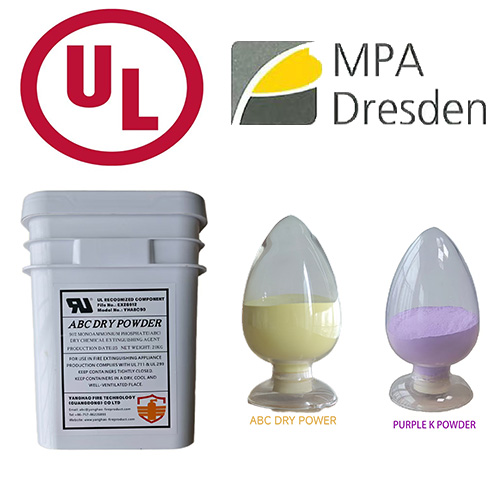
Why Some ABC Powder Leaves Too Much Residue
Introduction
Many users notice that some ABC powder extinguishers leave a large amount of dust and residue after discharge. While some residue is normal for any dry chemical powder, excessive residue may indicate poor product quality and reduced fire suppression efficiency.
The quality of the dry chemical fire extinguishing agent, especially the purity of monoammonium phosphate, plays a major role in residue performance.
Why Residue Happens
ABC powder works by releasing solid particles onto the fire surface. The active ingredient, monoammonium phosphate, melts under heat and forms a layer that stops combustion and improves fire suppression efficiency.
Because this process uses solid chemicals, some residue will always remain after discharge.
Poor Raw Materials Increase Residue
Low-quality dry chemical powder often contains cheap fillers and impurities. This can cause:
Excessive dust
Uneven discharge
Difficult cleanup
Lower fire suppression efficiency
High-quality ABC powder uses purified monoammonium phosphate to reduce unnecessary residue.
Particle Size Matters
Particle size directly affects how dry chemical powder behaves.
If particles are too fine:
dust spreads more easily
cleanup becomes harder
If particles are too large:
coverage decreases
fire suppression efficiency drops
Professional dry chemical fire extinguishing agent manufacturers carefully control particle size for balanced performance.
Moisture Can Make Residue Worse
When ABC powder absorbs moisture, the dry chemical powder may clump together and discharge unevenly.
This can lead to:
Heavier residue
Unstable spray
Reduced fire suppression efficiency
Because monoammonium phosphate is hygroscopic, proper storage is essential.
How Good Manufacturers Reduce Residue
Reliable suppliers improve dry chemical powder quality by using:
High-purity monoammonium phosphate
Advanced surface treatment
Balanced particle size
Moisture-proof packaging
These factors help maintain stable fire suppression efficiency while reducing excess residue.
Conclusion
Some residue is normal when using ABC powder, but excessive residue often indicates poor-quality dry chemical powder, low-grade additives, or weak production control.
The purity of monoammonium phosphate, particle size distribution, and surface treatment all directly affect both residue behavior and fire suppression efficiency.
For buyers and importers, choosing the right dry chemical fire extinguishing agent means looking beyond price and focusing on long-term performance, reliability, and product quality.
A better ABC powder not only extinguishes fires effectively but also reduces unnecessary cleanup and operational problems after discharge.