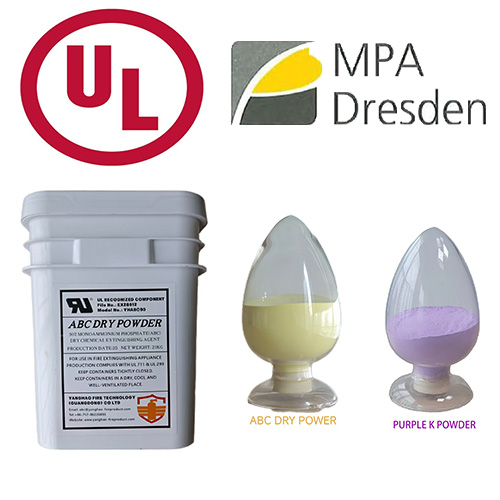
Why Purple K Excels in High-Intensity Class B Fires
1. Introduction
When dealing with high-risk flammable liquid fires, speed matters more than anything else. Among all dry chemical agents, Purple K dry powder has earned a global reputation for its exceptional performance in Class B fire suppression.
Unlike conventional ABC powders, Purple K is specifically engineered for rapid flame knockdown in fuel-intensive environments such as refineries, airports, chemical plants, and fuel storage facilities. This article explains why Purple K performs better, focusing on its chemistry, discharge behavior, and suitability for industrial fire protection.
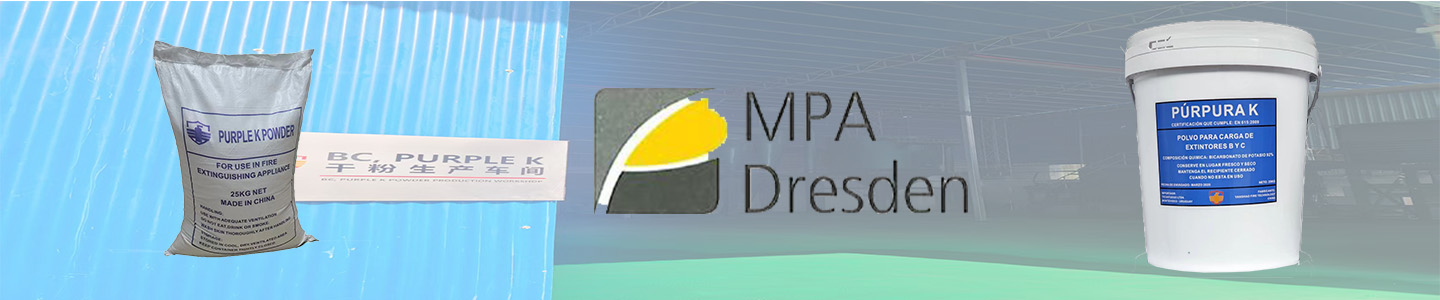
2. What Makes Purple K Different from Other Dry Powders
The core component of Purple K dry powder is potassium bicarbonate, which behaves very differently from phosphate-based agents.
During fire exposure, potassium bicarbonate decomposes at a lower temperature, releasing potassium radicals that aggressively interrupt the flame’s chain reaction. This gives Purple K a decisive advantage in Class B fire suppression, where liquid fuels burn rapidly and intensely.
Compared with standard ABC powders, Purple K delivers:
faster flame interruption
higher knockdown speed
lower agent consumption
reduced re-ignition probability
These characteristics make Purple K dry powder especially effective for large-scale industrial fires.
3. Knockdown Speed: The Critical Advantage
In fuel fires, every second counts. The knockdown speed of Purple K dry powder is significantly higher than that of multipurpose powders.
Independent tests show that Purple K can extinguish gasoline and ethanol pool fires up to 50% faster under identical discharge conditions. This rapid suppression minimizes:
heat radiation
vapor generation
flame spread
structural damage
For industrial fire protection, faster knockdown speed directly translates into reduced losses and improved personnel safety.
4. Why Potassium Bicarbonate Performs Better in Liquid Fires
The superiority of potassium bicarbonate lies in its chemical behavior:
It releases potassium ions that neutralize flame radicals
It disrupts the combustion chain reaction more efficiently
It forms a temporary flame-inhibiting zone above the fuel surface
This mechanism makes Purple K dry powder particularly effective against hydrocarbons, alcohol-resistant fuels, and pressurized liquid fires—core scenarios in Class B fire suppression.
Unlike ABC agents, Purple K does not rely on surface coating alone, which explains its higher reliability in turbulent fire conditions.
5. Application Scenarios for Industrial Fire Protection
Because of its performance profile, Purple K dry powder is widely specified in high-risk sectors:
oil & gas facilities
petrochemical plants
airport fire rescue systems
fuel loading terminals
chemical processing units
In these environments, industrial fire protection standards prioritize fast flame knockdown and minimal fire escalation—exactly where Purple K excels.
6. Operational Considerations and Limitations
While Purple K dry powder delivers superior Class B fire suppression, it is important to understand its proper use:
Not suitable for Class A deep-seated fires
Less effective on ordinary combustibles compared to ABC powder
Requires correct nozzle technique for maximum knockdown speed
For facilities dominated by liquid fire risks, however, Purple K remains one of the most reliable dry chemical solutions available.
7. Conclusion
Purple K dry powder stands out as a specialized, high-performance agent designed for rapid Class B fire suppression. Powered by potassium bicarbonate, it offers unmatched knockdown speed and proven reliability in demanding industrial fire protection scenarios.
For buyers and system designers focused on fuel-fire risk control, Purple K is not an alternative—it is the benchmark.