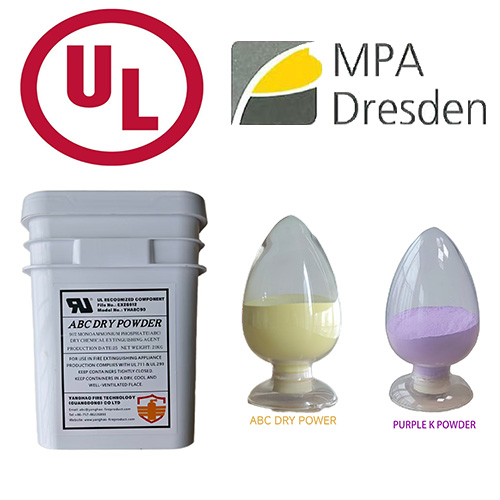
Moisture Effects on ABC Powder
1. Introduction
Among all fire-extinguishing media used in global markets, dry chemical powder remains the most widely adopted for Class A, B, and C risks. Its versatility, cost-effectiveness, and strong fire suppression efficiency make it a preferred choice across industrial facilities, commercial buildings, and automotive equipment. However, one performance factor often overlooked by international buyers is the relationship between moisture exposure and long-term powder stability.
This blog breaks down how humidity affects the structure and function of ABC powder, why the chemical balance of monoammonium phosphate is particularly sensitive, and how proper storage can maintain the reliability of any dry chemical fire extinguishing agent in diverse climates.
2. Why Moisture Threatens Powder Stability
Humidity changes the physical behavior of dry chemical powder at a microscopic level. Even a small increase in water absorption can cause granules to cake, bridge, or lose mobility. When this happens, discharge becomes inconsistent, and fire suppression efficiency may drop dramatically.
2.1 Hygroscopic Nature of Monoammonium Phosphate
Most ABC powder relies on monoammonium phosphate as the primary active ingredient. As a partially hygroscopic salt, it readily interacts with airborne moisture. When humidity enters the cylinder, monoammonium phosphate particles soften, fuse, and form irreversible agglomerates.
Once this transformation begins, the performance and expected suppression flow of the dry chemical fire extinguishing agent cannot be restored, even after drying or re-mixing.
2.2 Moisture-Induced Loss of Fluidity
Free-flowing behavior is the defining characteristic of high-quality dry chemical powder. When stored in high-humidity environments:
powder granules absorb water films,
friction between particles increases,
fine particles gather into lumps,
and circulation inside the extinguisher declines.
In critical moments, this directly reduces fire suppression efficiency, because the agent cannot exit the nozzle with sufficient uniformity.
3. Climate Challenges Affecting ABC Powder
Different countries face different humidity profiles, which determine the degradation rate of ABC powder.
3.1 Tropical Regions
Areas such as Southeast Asia, Central America, and coastal Africa have year-round humidity above 70%. In these regions, dry chemical powder must include stronger silica-based flow conditioners to protect monoammonium phosphate from premature clumping.
Even with additives, long-term exposure may still reduce fire suppression efficiency, requiring more frequent inspection cycles.
3.2 Desert and Semi-Arid Regions
Although the average humidity is low, day-night temperature swings can create condensation inside metal cylinders. This phenomenon introduces moisture capable of damaging ABC powder stored for long periods. For these markets, nitrogen-pressurized units and moisture-proof valve assemblies are essential to protect the dry chemical fire extinguishing agent.
3.3 Cold Environments
Cold climates reduce the air’s water-holding capacity, yet interior heating systems may still cause moisture fluctuations. As a result, long-term storage of dry chemical powder inside residential buildings must follow strict sealing and maintenance practices.
4. How Moisture Reduces Fire Suppression Efficiency
To understand performance decline, we must look at how an effective dry chemical fire extinguishing agent works during discharge.
High-quality dry chemical powder:
flows smoothly in a consistent cloud,
disperses uniformly over the flame,
forms a protective barrier,
interrupts the chemical chain reaction.
When humidity interferes with powder structure:
the cloud becomes uneven,
discharge range shortens,
the agent cannot blanket the burning surface,
and fire suppression efficiency drops.
Laboratory results show that moisture-damaged ABC powder may lose up to 40% extinguishing capability, especially in Class B flame tests.
5. Preventing Moisture Damage: Practical Guidelines
5.1 Use High-Grade Material with Coated Monoammonium Phosphate
Top-tier dry chemical powder uses hydrophobic surface-treatment technology on monoammonium phosphate, reducing its sensitivity to airborne moisture. This improves long-term stability and directly preserves fire suppression efficiency.
5.2 Check Valves and Cylinder Integrity
Even premium ABC powder becomes unstable if humid air enters the cylinder. Ensure:
valve seals are intact,
safety pins are corrosion-free,
and cylinder welds have no micro-cracks.
A tight cylinder protects any dry chemical fire extinguishing agent from environmental moisture exposure.
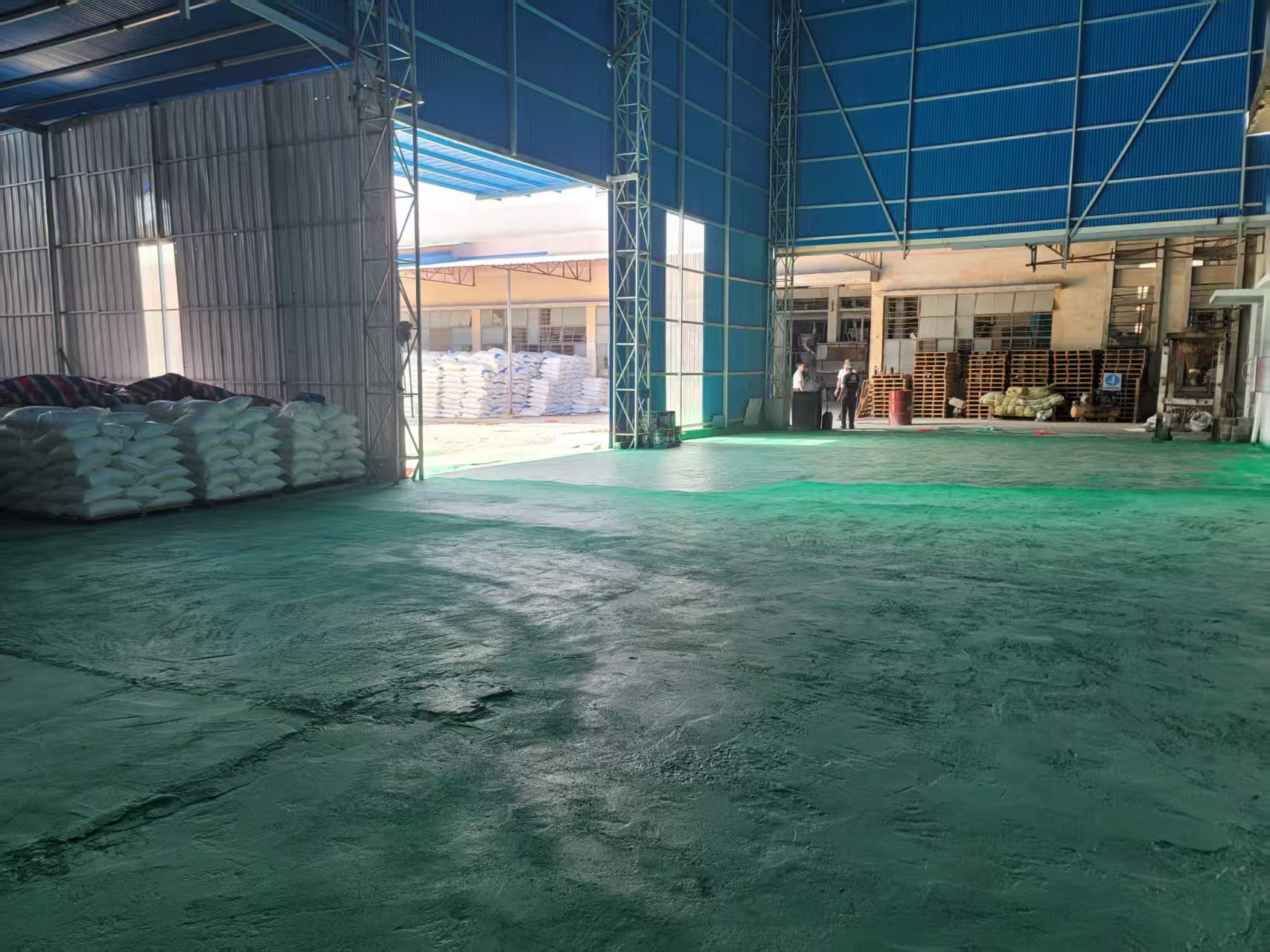
5.3 Store in Controlled Environments
Warehouses handling dry chemical powder should maintain:
humidity < 65%,
stable room temperature,
elevated pallets to avoid condensation from floors.
These steps reduce the risk of powder caking and maintain fire suppression efficiency during long-term storage.
5.4 Conduct Regular Shake Tests
A simple shake test can quickly reveal early signs of clumping. If the extinguisher feels unusually heavy or compact, the dry chemical fire extinguishing agent may already be absorbing moisture.
5.5 Implement FIFO in Distribution
Rotating inventory ensures the ABC powder with the longest storage time is sold first. Lower warehouse residence time equals lower moisture exposure risk.
6. Quality Verification for Importers
International buyers rely heavily on supplier transparency when purchasing dry chemical powder. To ensure powder remains stable against humidity:
request moisture-absorption test reports,
compare coatings used on monoammonium phosphate,
check flowability index values,
review climate-adapted formulations for your region,
request real-time batch test videos for the dry chemical fire extinguishing agent.
These steps help ensure the delivered product maintains its rated fire suppression efficiency even in challenging climates.
7. Conclusion
Moisture is one of the most significant external threats to the stability of dry chemical powder. Because ABC powder depends heavily on the physical integrity of monoammonium phosphate, humidity control directly determines whether the dry chemical fire extinguishing agent performs as expected.
By understanding environmental risks, improving storage conditions, and working closely with reliable manufacturers, distributors can maintain high fire suppression efficiency and provide safer, more dependable fire-protection products to global customers.