Introduction
A good dry chemical powder is only one part of an effective fire extinguisher. The powder must also work properly with the extinguisher's valve, hose, nozzle, and pressurization system.
When these components are properly matched, ABC powder can be discharged quickly and distributed across the fire. If the discharge system is poorly designed or incompatible with the powder, even a high-quality dry chemical fire extinguishing agent may not achieve its expected fire suppression efficiency.
For extinguisher manufacturers and buyers, understanding this relationship can help prevent performance problems during production and final use.
The Valve Controls Powder Discharge
The valve is one of the most important components of a fire extinguisher. It controls when the dry chemical powder leaves the cylinder and how it enters the discharge path.
A suitable valve should provide stable powder flow without unnecessary restriction. If the internal passage is too small or poorly designed, ABC powder may not discharge smoothly.
A well-matched valve helps maintain consistent discharge and allows the dry chemical fire extinguishing agent to reach the fire effectively.
Hose and Nozzle Also Matter
After leaving the valve, the powder normally travels through a hose and nozzle.
The design of these components affects:
Discharge speed
Spray pattern
Coverage area
Direction of the powder
If the nozzle is not properly matched to the dry chemical powder, the spray pattern may become uneven. This can reduce the amount of agent reaching the burning area and affect overall fire suppression efficiency.
Pressure and Powder Work Together
The extinguisher needs sufficient pressure to move ABC powder through the discharge system.
However, pressure alone does not guarantee good performance. The powder must also have suitable physical characteristics for the equipment.
A properly formulated dry chemical fire extinguishing agent should work smoothly with the selected pressure and discharge components.
This is why extinguisher manufacturers normally test the complete system rather than evaluating dry chemical powder separately.
Why Compatibility Is Important
Different extinguishers can use different cylinder sizes, valves, hoses, and nozzles. Therefore, a powder that performs well in one system may require different discharge conditions in another.
Before changing the ABC powder formulation, manufacturers should consider whether the new product is compatible with existing equipment.
This helps maintain stable discharge performance and expected fire suppression efficiency.
Testing the Complete Extinguisher
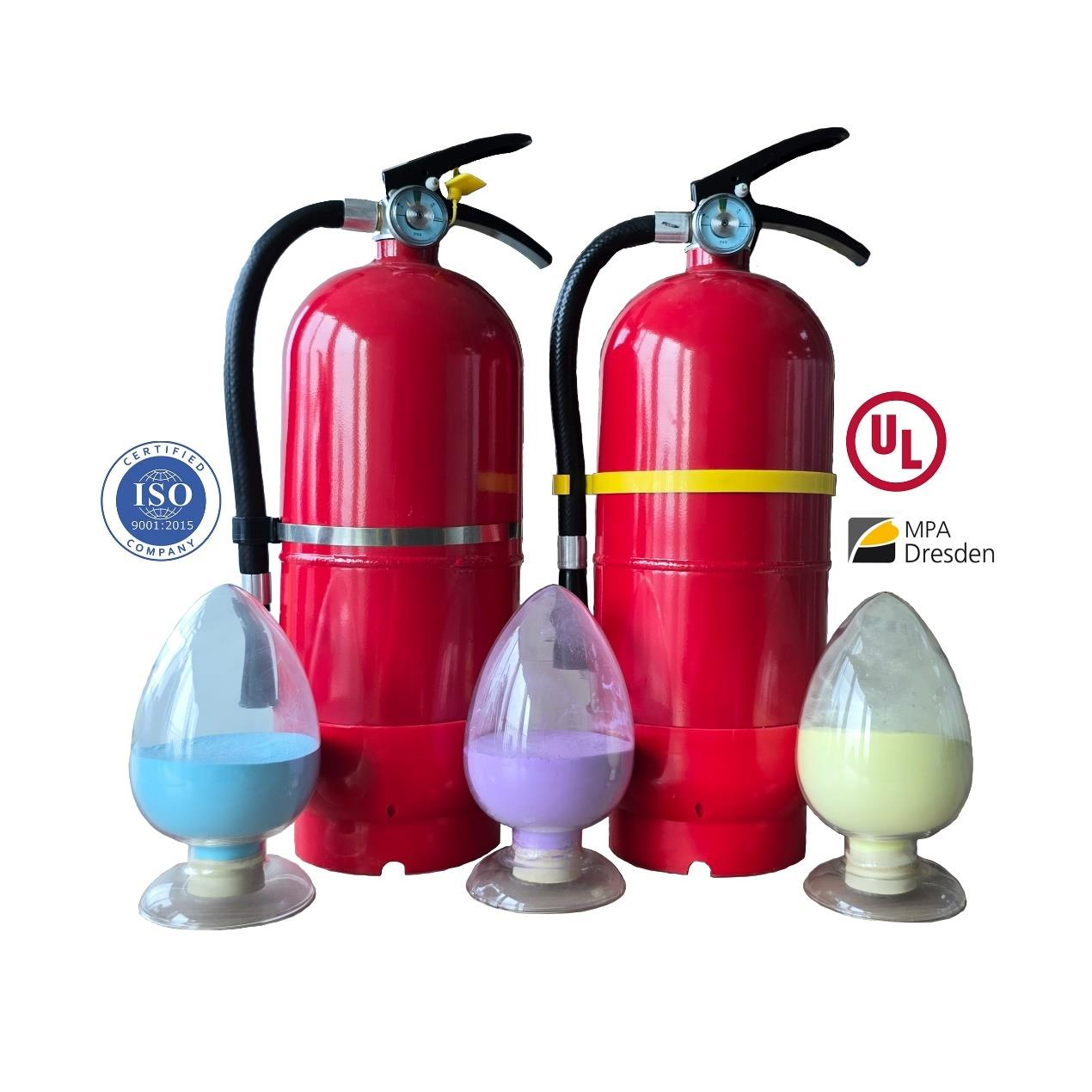
For manufacturers, testing only the powder is not enough.
A complete extinguisher test can evaluate:
Discharge time
Discharge rate
Spray pattern
Range
Fire extinguishing performance
These results show how the dry chemical powder actually performs inside the finished extinguisher.
The combination of a reliable discharge system and a suitable dry chemical fire extinguishing agent is essential for consistent results.
What Buyers Should Consider
When purchasing ABC powder for extinguisher production, buyers should provide suppliers with information about the intended equipment.
Useful details include:
Extinguisher capacity
Valve type
Propellant
Hose and nozzle design
Target fire classes
This allows the supplier to recommend a suitable dry chemical powder formulation and reduce compatibility problems.
Conclusion
The performance of a fire extinguisher depends on more than the chemical agent inside the cylinder. The valve, hose, nozzle, and pressure system all influence how effectively ABC powder is delivered to the fire.
A high-quality dry chemical fire extinguishing agent needs to work together with a suitable discharge system. When both are properly matched, the extinguisher can achieve stable discharge and reliable fire suppression efficiency.
For manufacturers and importers, evaluating powder and extinguisher components as one complete system is a practical way to improve product reliability and reduce performance risks.