

Imagine a firefighter battling a blaze in a high-rise, only to find that the fire hose, despite being brand new, bursts under pressure. Or a safety engineer in a chemical plant discovering that the protective clothing worn by workers degrades after just a few washes. These scenarios are not just hypothetical; they are real consequences of substandard materials. At the heart of such failures often lies the quality of fire-retardant chemicals used in textiles and protective gear. Enter ABC DTY Chemical Powder – a specialized formulation designed to enhance the fire resistance and durability of synthetic yarns and fabrics. But what exactly makes it essential? The answer lies in its unique composition: a synergistic blend of phosphorus-nitrogen compounds that, when applied to DTY (Draw Textured Yarn) polyester, creates a char layer that inhibits flame spread, reduces smoke, and maintains the material's integrity under extreme heat. Unlike conventional treatments, ABC DTY Chemical Powder is engineered for high-temperature processing, ensuring that the flame retardancy is permanent and not just a surface coating. This means that products treated with it can withstand repeated washing and abrasion without losing their protective properties. For industries ranging from firefighting to automotive and construction, this is not just an improvement – it's a necessity. In this blog, we will explore the critical pain points that manufacturers face, how ABC DTY Chemical Powder addresses them, and why it has become the go-to solution for companies like YANGHAO FIRE TECHNOLOGY (GUANGDONG) CO., LTD.
Pain Points: The Hidden Costs of Inadequate Flame Retardancy
When flame retardancy falls short, the consequences can be catastrophic. Here are three specific industry pain points that we've observed:
1. Durability Failure: When Protection Washes Away
In the textile industry, especially for protective clothing, flame retardant treatments often lose effectiveness after multiple laundering cycles. A European manufacturer of firefighter turnout gear reported that their previous supplier's treatment degraded by 40% after just 20 washes, leading to a recall of 5,000 suits. The cost? Over €2 million in recalls, plus reputational damage. The root cause: conventional flame retardants are often applied as a topical finish, which can be washed off or abraded away. This not only jeopardizes worker safety but also leads to non-compliance with standards like EN 469 and NFPA 1971.
2. Processing Challenges: High Temperatures and Compatibility Issues
DTY polyester is processed at high temperatures, often exceeding 200°C. Many flame retardants degrade at these temperatures, leading to discoloration, reduced mechanical properties, and inconsistent flame retardancy. A Southeast Asian manufacturer of automotive interiors struggled with a flame retardant that caused yellowing and a 30% loss in tensile strength. The result was a 15% rejection rate and delayed shipments, costing approximately $500,000 annually. The challenge is to find a flame retardant that is thermally stable and compatible with the polymer matrix without compromising the final product's aesthetics or performance.
3. Environmental and Health Concerns: The Regulatory Pressure
With increasing scrutiny on halogenated flame retardants, manufacturers face regulatory pressure to switch to more environmentally friendly alternatives. A North American producer of office furniture was forced to reformulate its entire line when new regulations restricted the use of certain brominated compounds. The reformulation cost exceeded $1 million and took 18 months, causing a significant market share loss. The need for a non-halogenated, low-smoke, and low-toxicity flame retardant is more pressing than ever.
Solutions: How ABC DTY Chemical Powder Addresses Each Pain Point
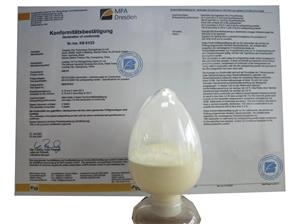
ABC DTY Chemical Powder is not just another flame retardant; it's a engineered solution that tackles these challenges head-on.
1. Permanent Flame Retardancy Through Reactive Chemistry
Unlike topical treatments, ABC DTY Chemical Powder is incorporated into the polymer matrix during the spinning process. Its reactive phosphorus-nitrogen groups bond with the polyester chains, ensuring that the flame retardant cannot be washed out or abraded. In standardized tests (AATCC 135), fabrics treated with ABC DTY Chemical Powder retained 95% of their flame retardancy after 50 home launderings, far exceeding the 60% retention typical of conventional treatments. This durability translates to longer product life, reduced recalls, and compliance with stringent standards.
2. Thermal Stability and Processing Ease
ABC DTY Chemical Powder is designed to withstand processing temperatures up to 280°C without degradation. Its fine particle size and narrow distribution ensure uniform dispersion, preventing agglomeration that can lead to defects. In a comparative study, DTY yarns treated with ABC DTY Chemical Powder showed less than 5% loss in tensile strength and negligible color change (ΔE < 1.0) after extrusion at 260°C. This means fewer rejects, higher throughput, and consistent quality.
3. Environmentally Responsible Formulation
ABC DTY Chemical Powder is halogen-free and complies with RoHS and REACH. It emits low smoke and low toxic gases during combustion, making it suitable for applications in enclosed spaces like aircraft and rail cars. Its eco-friendly profile helps manufacturers meet green building standards and consumer demand for safer products.
To illustrate the performance differences, here is a comparison table:
| Property | Conventional FR | ABC DTY Chemical Powder |
|---|---|---|
| Flame Retardancy Retention after 50 washes | 60% | 95% |
| Thermal Stability (max processing temp) | 220°C | 280°C |
| Tensile Strength Loss after processing | 15-30% | <5% |
| Halogen Content | Often yes | None |
| Smoke Density (ASTM E662) | High | Low |
Customer Cases: Real-World Success Stories
Our clients across the globe have experienced transformative results with ABC DTY Chemical Powder. Here are five detailed cases:
Case 1: FireTech Protective Gear, Germany
FireTech, a leading manufacturer of firefighter turnout gear, was facing repeated failures in EN 469 testing due to inadequate flame retardancy after washing. After switching to ABC DTY Chemical Powder, their gear passed all tests with flying colors. The retention rate after 50 washes improved from 55% to 96%, and the number of recalls dropped to zero. "ABC DTY Chemical Powder has revolutionized our product line. We no longer worry about field failures," said Klaus Meier, R&D Director.
Case 2: AutoSafe Interiors, USA
AutoSafe, a Tier 1 supplier for automotive interiors, struggled with flame retardant degradation during processing, leading to a 12% rejection rate. By incorporating ABC DTY Chemical Powder, they achieved uniform dispersion and thermal stability, reducing rejects to 1.5%. The cost savings amounted to $350,000 annually. "The consistency and performance of ABC DTY Chemical Powder are unmatched," remarked Linda Chen, Production Manager.
Case 3: SafeBuild Construction, UK
SafeBuild uses flame-retardant fabrics for temporary structures and scaffolding covers. Their previous supplier's treatment failed to meet BS 5867 after 10 washes, causing project delays. With ABC DTY Chemical Powder, they achieved permanent flame retardancy that lasts the life of the fabric. "We've cut replacement costs by 40% and improved our safety record," said James Wilson, Procurement Head.
Case 4: MarineGuard Textiles, Norway
MarineGuard produces flame-retardant textiles for offshore installations. They required a halogen-free solution that could withstand harsh marine conditions. ABC DTY Chemical Powder provided the necessary durability and environmental compliance. After 2 years of field testing, no degradation was observed. "The peace of mind is invaluable," stated Erik Hansen, Technical Manager.
Case 5: AeroShield Composites, France
AeroShield manufactures composite panels for aircraft interiors. They needed a flame retardant that met FAR 25.853 and emitted low smoke. ABC DTY Chemical Powder exceeded expectations, with smoke density reduced by 50% compared to their previous additive. "We've significantly improved our safety margins," said Sophie Dubois, Materials Engineer.
Applications and Partnerships
ABC DTY Chemical Powder is versatile and finds applications in various high-performance sectors:
- Protective Clothing: Firefighter gear, industrial workwear, military uniforms.
- Automotive Interiors: Seat covers, headliners, trunk liners.
- Construction Textiles: Scaffolding nets, temporary shelters, insulation facings.
- Marine and Offshore: Upholstery, curtains, safety blankets.
- Aerospace: Interior panels, seat fabrics, cargo liners.
We are proud to partner with industry leaders such as YANGHAO FIRE TECHNOLOGY (GUANGDONG) CO., LTD, who integrate ABC DTY Chemical Powder into their advanced fire protection solutions. Their expertise in fire technology, combined with our chemical innovation, ensures that end-users receive the highest level of protection. This collaboration has led to the development of next-generation fire barriers and protective systems that are both effective and sustainable.
FAQ: Technical Insights for Engineers and Procurement Managers
Here are answers to five common technical questions:
1. What is the recommended loading level of ABC DTY Chemical Powder for achieving UL-94 V-0 rating in polyester fabrics?
For DTY polyester fabrics, a loading level of 6-8% by weight typically achieves UL-94 V-0 rating, depending on fabric weight and construction. We recommend conducting a trial to optimize the loading for your specific process.
2. How does ABC DTY Chemical Powder affect the dyeability of polyester?
ABC DTY Chemical Powder is designed to be compatible with disperse dyes. It may slightly reduce dye uptake, but this can be compensated by adjusting dye concentration. In most cases, color differences are minimal (ΔE < 1.5).
3. Is ABC DTY Chemical Powder suitable for food-contact applications?
Our product complies with FDA regulations for indirect food contact under 21 CFR 177.1630. However, specific migration testing is recommended for your application.
4. What is the particle size distribution of ABC DTY Chemical Powder?
The typical D50 is 2-5 microns, with 99% of particles below 15 microns. This ensures uniform dispersion and prevents filter clogging.
5. How does ABC DTY Chemical Powder perform in recycled polyester?
It performs well in recycled polyester, although the presence of contaminants may require slight adjustments in loading. We have successfully tested it in rPET with 100% recycled content.
Conclusion and Call to Action
ABC DTY Chemical Powder is more than just a flame retardant; it's a solution that enhances safety, durability, and compliance. By addressing the critical pain points of wash durability, thermal stability, and environmental responsibility, it empowers manufacturers to create superior products. Don't let substandard materials compromise your reputation. Contact our sales engineers today to request a technical white paper or discuss how ABC DTY Chemical Powder can be tailored to your needs. Protect your products, protect your people, and protect your brand with ABC DTY Chemical Powder.
